Journal · Tender Analysis · 23 Sep 2026
What Eco World’s Record $1,612 psf ppr Bid Really Means
Seven developers wanted a 46,103 sqft plot off Sin Ming Avenue badly enough to fight for it. One of them wanted it 11.1% more than anyone else. That gap is the story.
The result, in numbers
When the tender for the Lorong Puntong / Sin Ming Avenue Government Land Sale site closed on 15 September 2026, URA opened seven envelopes. The winning one belonged to Eco World Development (S) Pte. Ltd.: S$208,099,000 for the 99-year leasehold plot, which works out to S$1,612 per square foot per plot ratio on the 129,093 sqft maximum gross floor area.
That figure matters twice over. It is the highest land rate ever paid for a Rest of Central Region GLS site, and it was the only bid of the seven to clear S$1,600. The runner-up, a joint venture between Hong Leong Holdings and TID, came in at S$187.33 million, or S$1,451 psf ppr. In percentage terms it was not even close. Here is how the top of the field stacked up.
| Bidder | Bid (S$) | psf ppr |
|---|---|---|
| Eco World Development (S) Pte. Ltd. | 208,099,000 | 1,612 |
| Hong Leong Holdings / TID joint venture | 187,330,000 | 1,451 |
| SMCL Oasis | 185,380,000 | 1,436 |
| EL Development | 182,100,000 | 1,411 |
Seven bids were lodged in total; the four highest are shown, as publicly reported. Full context on the land-cost page.
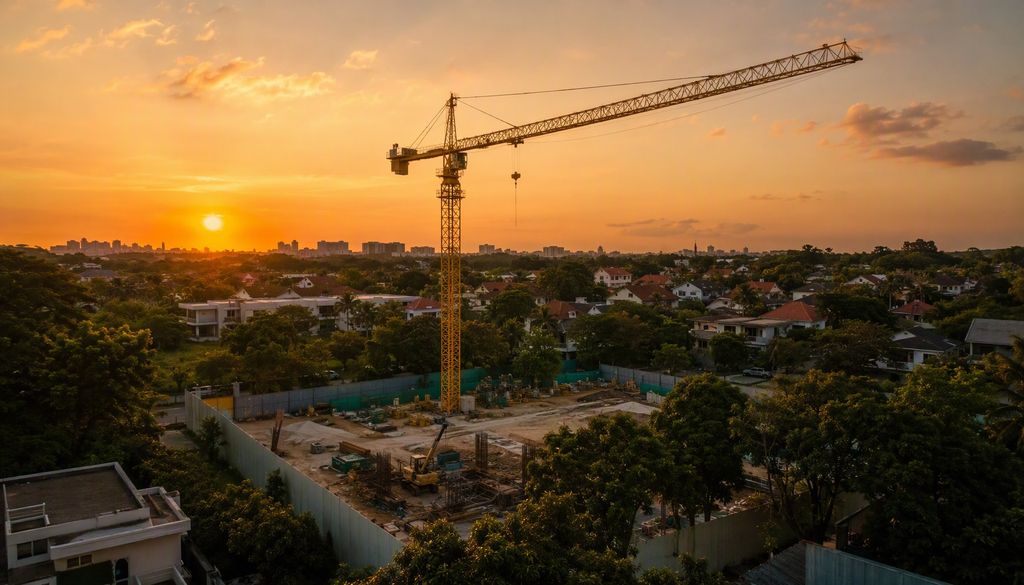
Why seven bidders chased a small plot
Start with the cheque size. At roughly S$200 million, this was one of the most affordable land parcels on the 2026 confirmed list. Compare that with the billion-dollar-plus commitments attached to large suburban sites and you see why the room was crowded: a plot this size does not require a consortium, a listed-company board fight, or a decade of absorption risk. A mid-sized developer could bid alone, and several did.
Then look at what the land actually is. About 140 units, by our estimate: a single sell-out phase rather than a five-year township programme. Bishan has not seen a GLS residential plot since 2015, so the catchment is full of families who have been waiting with their money. Bright Hill MRT is about 450 metres away, and it becomes a Cross Island Line interchange in 2030. Ai Tong School sits directly opposite, inside the one-kilometre Primary 1 priority band. You do not need a marketing department to sell that. You need a calculator and nerve.
So the seven bids were not seven gamblers. They were seven balance sheets that had each decided the maths worked. The interesting question is why one balance sheet decided the maths worked at a price nobody else would touch.
Reading the 11.1% gap: conviction versus consensus
Cluster the field and a pattern appears. EL Development at S$1,411, SMCL Oasis at S$1,436, Hong Leong/TID at S$1,451: three bids inside a forty-dollar band. That is the market’s consensus view of what this land is worth, reached independently by teams with every incentive to sharpen their pencils.
Eco World’s S$1,612 sits S$161 above that band. An 11.1% premium over the second-placed bid is not a rounding decision; it is a statement. Part of it is strategic: this is the group’s first Singapore GLS win, a tender debut, and debut buyers routinely pay for certainty because a lost tender buys them nothing. Part of it is conviction: Eco World’s analysts plainly believe the Bishan buyer pool, the school effect and the 2030 interchange support pricing that the local consensus was not prepared to underwrite.
Our read: the gap tells you more about the winner than about the land. The land is good; seven bidders confirmed that. The premium is about who Eco World wants to become in Singapore.
Land is already more than half the launch price
Work the cost stack forward. On our base case: S$520 psf construction, S$300 psf for professional fees, financing and marketing, total cost lands near S$2,432 psf before any margin. Add a 12% margin on cost and breakeven sits around S$2,724 psf. Analysts at Newmark and Stacked Homes have floated a launch in the S$3,000–3,100 psf range, which is why S$3,000 is the figure you will keep seeing on this site.
Now do the uncomfortable division. At a S$3,000 psf launch, the S$1,612 land component is roughly 54% of what a buyer pays. More than half of every cheque written at the showflat goes not to the building, the fittings or the pool, but to the plot of earth underneath, bought at a record price on a September afternoon in 2026. Every number in that chain is an indicative estimate until Eco World publishes its price list, but the shape of the stack will not change. Record land in, record-anchored pricing out.
The honest counterpoint
There is a name for paying 11.1% more than everyone else at an auction: the winner’s curse. On day one, that risk belongs entirely to Eco World. If the market softens before launch, the margin compresses from the developer’s side first: the land cost is sunk and immovable.
But buyers should not mistake the developer’s risk for their own protection. Whoever signs at the showflat inherits the price anchor. A breakeven near S$2,700 psf means there is very little room for early-bird discounts, and a record RCR land rate means the project reprices every comparable around it. Thomson Impressions owners were quietly the first winners of this tender, before a single unit was sold. If you buy here, you are underwriting the most expensive suburban land decision ever made in Singapore. That may prove to be a fine decision. Go in knowing it is one.
Be first through the showflat doors.
Registrants receive the official project name, floor plans and price list the moment the developer releases them, plus priority showflat slots. No obligation, no spam.